Tag: google business profile optimization

  • Why Posting Daily on Google Business Profile Still Doesn’t Work

    Why Posting Daily on Google Business Profile Still Doesn’t Work

    “I posted every day. Added offers. Uploaded photos. Asked for reviews.
    Yet my phone stayed silent.”

    That’s the moment many businesses realize something uncomfortable: posting daily on Google Business Profile feels productive—but results don’t follow.

    If you’re wondering why Google Business Profile still doesn’t work even after consistent posting, you’re not alone. Thousands of businesses follow Google’s visible recommendations and still struggle with rankings, calls, and leads.

    Here’s the truth most guides won’t tell you: Google Business Profile in 2026 is no longer about activity—it’s about behavior.

    And that changes everything.

    Why Does Google Business Profile Still Doesn’t Work for So Many Businesses?

    The biggest misconception is believing that frequency equals visibility. It doesn’t anymore.

    Google’s recent updates shifted how local rankings work. Posting daily without engagement, relevance, or conversion signals is like talking loudly in an empty room. Google notices the noise—but rewards the response.

    This is why many businesses say, “My Google Business Profile isn’t ranking even after optimization.”

    Because optimization without outcomes is invisible to the algorithm.

    How Did Google Business Profile Change After Recent Google Updates?

    Google Maps and local search are now driven by real user interaction, not just profile completeness.

    In 2026, Google evaluates:

    • What users do after seeing your profile

    • Whether they take action or bounce

    • How often your listing creates real outcomes

    This explains why daily posts alone fail. Google doesn’t rank effort—it ranks impact.

    A simple way to visualize this is through a behavior funnel:

    Profile View → Engagement → Action → Trust Signal

    If posting daily doesn’t move users down this funnel, your visibility stalls.

    Why Posting Daily on Google Business Profile Still Doesn’t Work Without Engagement?

    Posting daily is passive. Google rewards reaction, not routine.

    Many businesses post:

    • Generic updates

    • Promotional offers

    • Repeated service descriptions

    But users scroll past without clicking, calling, or requesting directions. That sends a silent signal to Google: this profile isn’t useful.

    This is closely tied to a common frustration:
    Why Am I Getting Website Visitors But No Leads or Phone Calls?

    Because attention without intent doesn’t convert—and Google sees that.

    Is Google Business Profile Optimization Still About NAP and Keywords?

    NAP consistency and keywords still matter—but they’re no longer decisive.

    In local SEO, Google now blends:

    • Proximity

    • Relevance

    • Trust

    • Behavior

    If your profile is optimized but ignored, proximity won’t save you. This is why many businesses ask:
    Why Is My Local SEO Not Working Even After Optimization?

    Because optimization is the baseline, not the differentiator.

    What Google Maps Signals Matter More Than Daily Posting?

    Google Maps now tracks:

    • Call clicks

    • Direction requests

    • Profile interactions

    • Review velocity and sentiment

    • Time spent on linked pages

    If your daily posts don’t trigger these actions, they don’t strengthen your profile.

    Think of it like this graph:

    X-axis: Posting Frequency
    Y-axis: Engagement Actions

    Most businesses increase X while Y stays flat. Google ranks based on Y.

    Why AI Content and ChatGPT Posts Don’t Fix GBP Rankings

    Many businesses now use AI Content or ChatGPT Content to post daily faster. That saves time—but often hurts results.

    AI-written posts usually:

    • Sound generic

    • Miss local intent

    • Lack emotional triggers

    Google’s system detects patterns that users ignore. This connects directly to AI Content vs Google Rankings—AI helps scale content, but not trust.

    Without human relevance, daily posting becomes digital noise.

    How Does Content Marketing Tie Into Google Business Profile Performance?

    Your Google Business Profile doesn’t exist in isolation. Google tracks what happens after the click.

    If your website:

    • Loads slowly

    • Doesn’t answer intent

    • Has weak CTAs

    Then even engaged users drop off.

    That’s why content marketing and blog writing strategies now influence local rankings. Google evaluates whether your ecosystem supports user satisfaction—not just your profile.

    This also explains why many businesses struggle with How to Increase Website Traffic Organically but fail to convert locally.

    What Actually Works Instead of Posting Daily?

    The goal isn’t more posts—it’s better outcomes.

    High-performing profiles focus on:

    • Posting less, but with intent-driven topics

    • Aligning posts with search-based questions

    • Using posts to guide users to conversion paths

    • Updating based on user behavior data

    One strong post that drives calls beats 30 ignored updates.

    Why Businesses Feel Google Business Profile Still Doesn’t Work in 2026

    Because they’re following outdated advice.

    SEO in 2026 is no longer checklist-based. Google evaluates decisions, not just data.

    This mirrors what many businesses experience across channels:
    Traffic without leads. Visibility without growth. Activity without return.

    It’s the same reason many business ideas fail early—not lack of effort, but lack of alignment with user behavior.

    How Should You Measure Success on Google Business Profile Now?

    Stop tracking:

    • Number of posts

    • Posting streaks

    Start tracking:

    • Calls from GBP

    • Direction requests

    • Profile click-through rate

    • Actions per impression

    If those metrics improve, rankings follow.

    Frequently Asked Questions

    Q: Does posting daily hurt Google Business Profile rankings?
    A: No, but it doesn’t help unless users engage with your content.

    Q: Why is my Google Business Profile not ranking even with regular updates?
    A: Because Google prioritizes interaction, trust, and relevance over posting frequency.

    Q: Is Google Business Profile still worth it in 2026?
    A: Yes—but only when used as a behavior-driven channel, not a posting platform.

    Q: Can AI tools improve Google Business Profile results?
    A: Only when paired with human strategy and local intent.

    Final Thoughts

    Google Business Profile still works—but not the way most businesses use it.

    Posting daily feels productive, but Google rewards results, not routines. In 2026, local visibility is earned through engagement, trust, and meaningful actions—not frequency alone.

    When businesses shift from “What should I post today?” to “What will users do after they see this?”, everything changes.

    If your Google Business Profile looks active but still isn’t driving calls or growth, it’s time to stop guessing.
    ListBusinessProfile offers a free website and local visibility audit to uncover why your profile isn’t converting—and what Google actually expects in 2026.

  • Boost Local Visibility: Google Business Profile SEO Tips for 2025

    Boost Local Visibility: Google Business Profile SEO Tips for 2025

    In an increasingly digital world, local search has become the frontline of customer acquisition. When users search for services “near me,” Google Business Profile SEO (formerly SEO Google My Business) determines whether your business appears in those coveted local pack results.

    In 2025, competition for local attention has never been fiercer.

    To stay ahead, you need a robust, up-to-date optimization strategy that leverages the latest GBP features, emphasizes Local SEO Strategies, and delivers real value to both Google and prospective customers.

    10 Tips To Boost Your GBP Optimization

    10 Tips To Boost Your GBP Optimization -listbusinessprofile

    Below, we summarize ten actionable tips backed by best practices and emerging trends to supercharge your GBP Optimization and drive measurable local growth.

    1. Fully Complete Every Profile Field

    Why it matters: Google rewards profiles that are complete and accurate. A fully fleshed-out profile signals to Google’s algorithm and searchers that your business is active, trustworthy, and relevant.

    Action steps:

    • Business Name & Categories: Use your official legal name. Select one primary category that best defines your core offering (e.g., “HVAC contractor”) and up to ten secondary categories to capture adjacent services (e.g., “Air duct cleaning,” “Heating repair”).
    • NAP Consistency: Ensure your Name, Address, and Phone Number (NAP) exactly match across your website, social profiles, and local directories. Discrepancies dilute your Google Business SEO Optimization and confuse search engines.
    • Attributes & Specialties: In 2025, GBP offers dozens of attributes (e.g., “Wheelchair accessible,” “Veteran-led,” “Free wi-fi”). Choose those most relevant, and use the “Services” or “Products” sections to list pricing tiers, SKU numbers, or specialties.


    2. Leverage Engaging Visual Assets

    Why it matters: Listings with photos and videos see significantly higher engagement, up to 50% more clicks to websites and 40% more direction requests.

    Action steps:

    • Exterior & Interior Shots: Provide clear, well-lit images of your storefront (so customers can identify your location) and interiors (to set expectations).
    • Team & Process Videos: Short vertical videos (15–30 seconds) showcasing your team in action or behind-the-scenes processes humanize your brand and encourage customer trust.
    • 360° Virtual Tours: If you serve higher-ticket services (e.g., real estate, auto dealerships), a virtual tour can drastically improve time-on-listing and conversion rates.

    3. Publish Regular GBP Posts & Offers

    Regular GBP Posts & offers -listbusinessprofile

    Why it matters: Fresh content signals to Google that your business is alive and well. In 2025, businesses posting weekly saw a 20% bump in map-pack rankings.

    Action steps:

    • Event & Offer Posts: Use GBP Posts to highlight limited-time promotions, seasonal events, or new product launches.
    • COVID-19 & Safety Updates: Though the acute phase of the pandemic is over, customers still appreciate transparency around health measures, so continue updating any relevant safety protocols.
    • “What’s New” Video Clips: Embed a 15-second teaser linking back to your blog or social channel, improving cross-channel engagement.

    4. Cultivate & Respond to Reviews

    Why it matters: Reviews are both a ranking factor and a powerful social proof mechanism. Google values recent, positive reviews highly when determining local pack placements.

    Action steps:

    • Automate Review Requests: Integrate your CRM or point-of-sale system to send a review invitation via SMS or email immediately after service completion.
    • Respond within 48 Hours: Thank positive reviewers by name and address negative feedback with empathy and a path to resolution. Personalization is key to avoiding copy-and-paste replies.
    • Flag Inappropriate Reviews: If a review violates Google’s policies (spam, hate speech, off-topic), flag it for removal.

    5. Harness Local Keywords & Geo-Modifiers

    Why it matters: Google’s AI increasingly matches search intent with highly specific, location-augmented queries.

    Action steps:

    • Keyword Research: Use tools like Google Keyword Planner or Ahrefs to find high-volume, low-competition local terms (e.g., “best gluten-free bakery in Seattle”).
    • Natural Integration: Embed these keywords in your business description, Services/Specialties section, and GBP Posts. For example: “At BlueWave Plumbing, our emergency plumber in Seattle team is on call 24/7.”
    • Landing Page Alignment: Ensure your website’s service pages reflect the same keywords and NAP consistency to bolster on-site Local SEO Strategies.

    6. Optimize for Mobile & Core Web Vitals

    Why it matters: Over 60% of local searches happen on smartphones. Google’s mobile-first indexing means your website’s performance directly impacts your GBP performance.

    Action steps:

    • Click-to-Call & Directions Buttons: Verify that phone numbers and “Get Directions” links function seamlessly on all devices.
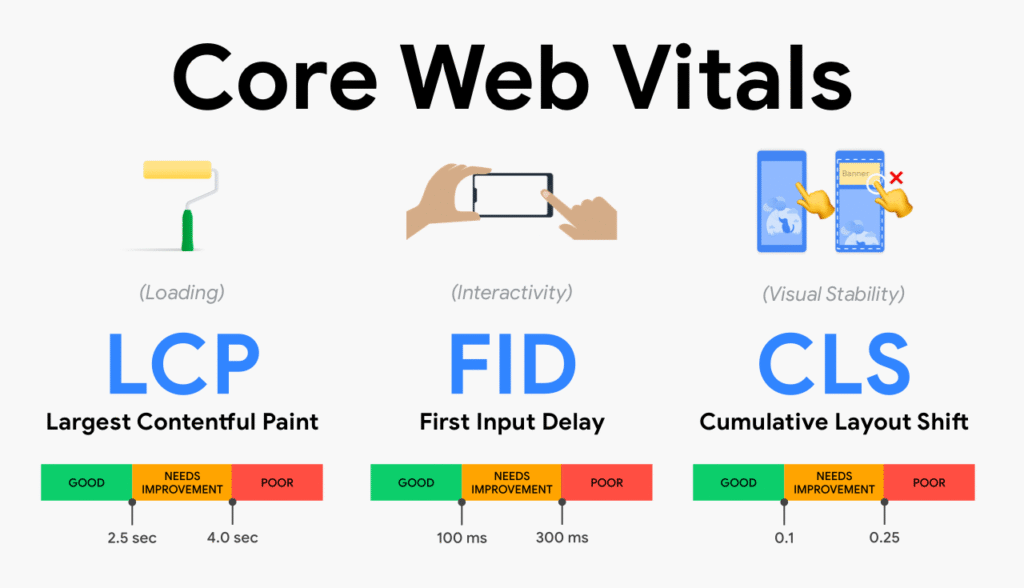
    • Core Web Vitals: Use Google Search Console to monitor LCP (Largest Contentful Paint), FID (First Input Delay), and CLS (Cumulative Layout Shift). Aim for sub-2.5s LCP, sub-100 ms FID, and CLS <0.1.
    • AMP & PWA: Consider Accelerated Mobile Pages (AMP) or Progressive Web App (PWA) implementations for key service pages to boost load speeds and user engagement.

    7. Implement Messaging, Bookings, & Q&A

    Why it matters: Direct customer engagement features boost click-through rates and on-listing conversions.

    Action steps:

    • Messaging: Turn on GBP Messaging and assign team members to respond within 15 minutes. Use Saved Replies for common inquiries.
    • Booking Integrations: Link a scheduling partner (e.g., Calendly, Acuity) or your internal booking system so customers can secure appointments directly from your listing.
    • Proactive Q&A: Pre-populate frequently asked questions (e.g., “Do you offer same-day service?”) and reply promptly when new questions appear.

    8. Add Products & Services

    Why it matters: GBP’s Products tab (and Services list) enables you to showcase pricing, descriptions, and even product images, keeping customers engaged without leaving Google.

    Action steps:

    • Product Catalog: List top-selling items with SKU, price, and short description.
    • Service Packages: Bundle services with clear scope and pricing.
    • Seasonal & Promotional Items: Highlight holiday specials or limited-edition products to create urgency.

    9. Monitor Performance with Insights & Analytics

    Why it matters: Continuous improvement relies on data. GBP Insights uncovers what drives clicks, calls, and direction requests.

    Action steps:

    • Key Metrics: Track queries used to find your listing, total searches, views by map vs. search, and customer actions (calls, website clicks, direction requests).
    • U-TM Parameters: Append UTM tags to your website URL in GBP so you can measure traffic in Google Analytics. For example: ?utm_source=GBP&utm_medium=organic&utm_campaign=local-seo.
    • Adjust & Iterate: If a certain service gets little traction, refresh its description, add photos, or promote it via a dedicated GBP Post.

    10. Stay Ahead with AI & Emerging Features

    AI & Emerging Features

    Why it matters: Google regularly rolls out new GPT-powered suggestions, automated post creation, and local deal highlights.

    Action steps:

    • AI-Assisted Descriptions: Test Google’s AI suggestions for your business descriptionvthen refine manually to ensure accuracy and brand voice.
    • Automated Highlights: Opt in for beta features like “Best Way to Reach You” snippets, so Google can dynamically show your top contact method.
    • Local Li…fixtures: Watch for features such as AI-summarized review highlights that may soon appear in your profile.

    Conclusion

    Google Business Profile SEO in 2025 demands a holistic, proactive approach. By completing every field, implanting high-quality visuals, consistently publishing fresh content, and leveraging advanced features like messaging and AI suggestions, you’ll earn higher local pack rankings and foster deeper customer connections.

    Remember: Local SEO Strategies are not “set and forget.” Regularly audit your NAP, refresh your photos, solicit and respond to reviews, and analyze Insights to keep your profile sharp and competitive.

    Start implementing these GBP Optimization tips today and watch your local visibility, foot traffic, and revenue grow tomorrow.

    Frequently Asked Questions
    1. How often should I update my Google Business Profile?
      At a minimum, review your profile monthly. Immediately update whenever you change hours, phone numbers, or service offerings.
    2. Can I transfer ownership of a GBP listing?
      Yes. Under the “Users” section, you can add a new owner or manager. Ownership transfers require acceptance by the new owner.
    3. Is there a character limit for the business description?
      Yes, approximately 750 characters. Focus on 250–300 characters for your primary messaging to ensure it’s fully visible without truncation.
    4. What if I serve multiple locations?
      Create a separate GBP listing for each unique physical location. Consolidate performance monitoring under a Google Business Profile optimization Manager account.
    5. Do GBP Posts expire?
      Event posts remain live up to the event date + 1 day; offer posts last for 7 days by default. Regular posting keeps your content in front of searchers.