Tag: seo

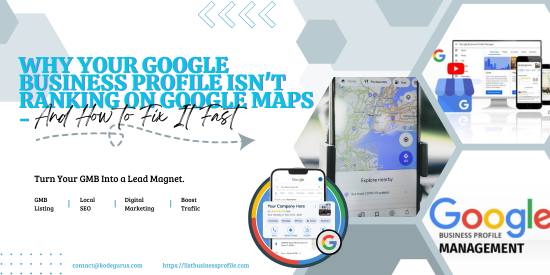
  • Why Your Google Business Profile Isn’t Ranking on Google Maps — And How to Fix It Fast

    Why Your Google Business Profile Isn’t Ranking on Google Maps — And How to Fix It Fast

    Google Business Profile Ranking Fixes -Listbusinessprofile

    If you’re wondering why your Google Business Profile ranking is slipping or why you’re not showing up on Google Maps, you’re not alone. In 2025, the competition for local visibility has skyrocketed. Whether you’re a local shop owner, service provider, or digital marketer, understanding why your business isn’t ranking and how to fix it can be the game-changer for lead generation and revenue.

    So, what are the reasons behind poor rankings on Google Maps, and more importantly, how can you fix your GMB ranking fast?

    Let’s dive into the most common issues and proven strategies to increase Google Business Profile traffic today.

    What Is Google Business Profile Ranking and Why It Matters in 2025

    google my business optimization

    Google Business Profile Ranking refers to how high your business appears in local search results, especially the Google Maps 3-pack. It plays a crucial role in determining how many potential customers see and click on your listing.

    88% of consumers who do a local search visit or call a business within 24 hours. If you’re not ranking, you’re invisible.

    Why Your Google Business Profile Isn’t Ranking

    Your business might be missing out on traffic for several reasons. Here are the most common problems:

    Your Business Profile Isn’t Fully Optimized Many businesses leave their profiles incomplete. Missing business hours, categories, or service areas can reduce your visibility.

    Inconsistent NAP (Name, Address, Phone Number) If your contact details vary across platforms like Yelp, Bing, and Yellow Pages, Google sees your listing as unreliable.

    You Have Few or Poor Reviews Low review counts or negative ratings tell Google that your business may not be trustworthy or relevant.

    Lack of Engagement on Your Google Business Page An inactive profile appears neglected. Businesses that post updates and respond to reviews tend to perform better.

    Weak Website SEO Even your connected website impacts your local ranking. Slow load speed, broken links, or no local content can harm your GMB visibility.

    You Haven’t Verified Your Profile Unverified profiles don’t rank. If your business isn’t verified via postcard, phone, or email, you’re missing a critical step.

    Spammy Practices or Suspensions Violating Google’s guidelines by keyword stuffing your business name or creating multiple listings can lead to penalties or suspension.

    How to Fix GMB Ranking Issues — Step by Step

    GBP Not Ranking -Listbusinessprofile

    Fixing your Google Business Profile ranking isn’t about hacks — it’s about following proven, white-hat strategies:

    Optimize Your Business Information

    Ensure every section of your profile is filled out with accurate and keyword-rich content. Use the right primary and secondary business categories, write an engaging business description, and upload quality images to establish trust with potential customers and Google.

    Keep Your NAP Consistent Across the Web

    Your Name, Address, and Phone Number must match exactly across all online directories and citations. Tools like Moz Local or BrightLocal help you manage and correct inconsistencies that could affect trustworthiness.

    Get More Customer Reviews — And Respond to Them

    Actively request reviews from satisfied customers and respond to each one. Engagement demonstrates reliability to Google and boosts user confidence. Thanking users or addressing concerns promptly makes your business more credible.

    Post Regularly on Your Profile

    Weekly updates, promotions, or service highlights on your Google Business Page show activity and relevance. Each post should include a call to action (CTA) like “Book Now” or “Call Today” to drive interaction.

    Add Local SEO Elements to Your Website

    Ensure your website contains location-specific keywords, internal links to service areas, and embedded Google Maps. Also, implement structured data (schema) for enhanced indexing and visibility.

    Use the Google Business Profile Manager

    Leverage the insights and analytics from the profile manager to monitor traffic, actions, and customer behavior. Adjust strategies based on what’s working and what’s not.

    Build Local Backlinks

    Reach out to local blogs, news outlets, or business directories for backlinks. Local citations and backlinks improve both your domain authority and local search rankings.

    Real-World Example: Local Spa Owner in Chicago

    A Chicago-based spa was buried under competitors until they made a few key changes. First, they rewrote their business description using targeted Local SEO keywords that matched their top services. They also posted weekly skincare tips, limited-time offers, and promotions to engage their audience. Every review—positive or negative—was responded to promptly, and they personally asked 20 loyal clients for new feedback.

    Result: Within four weeks, their Google Business Profile moved from page 3 to appearing in the local 3-pack, resulting in a noticeable spike in appointment bookings and calls.

    SEO Trends 2025 and Google’s Update Impact

    Google’s latest algorithm updates focus heavily on providing accurate, helpful, and mobile-friendly results. Here’s what matters most in 2025:

    User Intent: Google rewards listings that clearly answer user queries. Ensure your business description and services are aligned with what people are actually searching for.

    Engagement Signals: Google notices when users click, call, review, or engage with your profile. More engagement means better rankings.

    Mobile-First Indexing: Since most users search via smartphones, your website and business profile must be fully responsive and quick to load.

    Why Technical SEO Still Matters

    Even if your focus is on local SEO, your website remains a foundational element of your online presence. Google evaluates site speed, structure, and security as ranking factors. Here’s what to prioritize:

    • Ensure pages load in under 3 seconds.

    • Make your site fully mobile responsive.

    • Use clear, logical heading structures (H1 for titles, H2/H3 for subtopics).

    • Use HTTPS with a valid SSL certificate.

    A strong website backend supports better performance on Google Maps as well.

    How Listbusinessprofile Can Help You Rank

    At Listbusinessprofile, we help small and local businesses rank better by combining the latest best practices with personalized strategy. Our services include:

    • Setting up or optimizing your Google Business Page with all necessary elements.

    • Managing reviews, questions, and photo updates to keep your profile active.

    • Running weekly Google Posts with CTA-driven promotions.

    • Optimizing your connected website with local SEO, schema markup, and fast load speeds.

    • Monitoring your performance through Google Business Profile Manager and making continuous adjustments.

    Final Thoughts: Don’t Let Your GMB Profile Cost You Customers
    google Business Page

    If you’re not ranking on Google Maps or local search results, you’re missing valuable leads every day. From outdated info to weak engagement, every issue can be solved with the right approach.

    Whether you want to fix GMB ranking fast or build a long-term local presence, our team is here to guide you.

    Want to improve your Google Business Profile ranking or Increase Google Business Page Traffic today? Let Listbusinessprofile help you turn things around.

    Contact us now and start showing up where your customers are already searching.

  • SEO, AIO, GEO, AEO: Which One Actually Gets You Traffic

    SEO, AIO, GEO, AEO: Which One Actually Gets You Traffic

    SEO-AEO-GEO-listbusinessprofile

    In 2025, simply stuffing keywords into a webpage is no longer enough to get noticed by Google. The digital marketing space has evolved rapidly, and with it, four major strategies have emerged: SEO, AIO, GEO, and AEO. Each of these plays a role in helping businesses rank, gain visibility, and attract more qualified traffic.

    But what’s the difference between them—and more importantly, which one delivers real results?

    Let’s break it all down, using real examples, engaging questions, and smart takeaways that you can implement today.

    What Is SEO in 2025 and Why It Still Matters

    SEO, or Search Engine Optimization, remains the backbone of online visibility. But in 2025, it’s more complex than ever.

    SEO now focuses on:

    • Understanding user search intent

    • Building Experience, Expertise, Authority, and Trust (E-E-A-T)

    • Speed, user experience, and Core Web Vitals

    • Using schema markup and structured data

    Example: A user searches for “best lawyer near me.” Google checks for a fast-loading site, consistent business details, solid reviews, and localized content—before showing results.

    ✅ Want to be seen? Start with a well-optimized website and Google Business profile.

    What Is AIO – AI Optimization in Real Life

    AIO (AI Optimization) is about aligning your content so that AI tools—like ChatGPT or Google Gemini—understand and elevate it.

    AIO helps content get indexed and summarized by AI properly. It includes:

    • Using clear, structured formats

    • Creating well-outlined content with AI prompts

    • Training AI models on your voice for brand consistency

    Example: A fitness coach uses AI tools to write structured workout blogs. These pieces rank higher as AI tools pull them into answers.

    Question: Are you using AI just to speed things up—or to create smarter content? 

    What Is GEO – Generative Engine Optimization

    What Is GEO – Generative Engine Optimization​

    GEO means optimizing content to appear in AI-generated search results, like Google’s SGE or Bing Chat.

    GEO involves:

    • Formatting content into Q&A or snippet-friendly style

    • Including FAQs and headings for easy parsing

    • Being concise but informative

    Example: A tax consultant writes blogs answering questions like “Can I deduct rent as a business expense?” These blogs are picked up by Google’s AI-generated snippets.

    Question: Are you writing for people, search engines—or both?

    AEO – Answer Engine Optimization in Practice

    AEO-VS-SEO

    AEO focuses on optimizing for voice search, smart assistants, and zero-click queries.

    With more users asking questions directly to their phones or smart speakers, you need:

    • Simple language and clear answers

    • FAQ pages with brief responses

    • Schema markup for voice search

    Example: A local bakery adds a Q&A page with questions like “Do you make gluten-free cakes?” The answer gets read aloud in voice searches.

    Question: Is your content mobile and voice-friendly?

    How to Optimize Your Google Business Profile in 2025

    Your Google Business Profile is a vital asset in local SEO.

    To drive leads and improve visibility:

    • Regularly post updates, promotions, and images

    • Use relevant questions and answers

    • Keep NAP details consistent

    • Encourage positive reviews

    Example: A pet groomer updates their profile weekly and answers user questions like “Do you handle large breeds?” Result: they appear first in Google’s local pack.

    Question: Are you making the most of your Google listing—or letting it go stale?

    Which Strategy Wins in 2025? SEO, AIO, GEO, or AEO?

    Each strategy has a unique role:

    • SEO: Must-have for websites and ranking on Google

    • AIO: Ideal for improving AI content visibility

    • GEO: Perfect for being featured in AI search experiences

    • AEO: Great for voice search and snippet dominance

    The best approach? Combine all four for maximum results.

    6 Ways to Combine SEO, AIO, GEO & AEO

    1. Start with SEO: Focus on clean code, fast sites, meta tags, and solid content.

    2. Add AIO: Use AI tools to brainstorm and refine—but humanize the final output.

    3. Incorporate GEO: Use subheadings, lists, and structured content.

    4. Integrate AEO: Add FAQs, speak in everyday language, and use rich snippets.

    5. Optimize Your Google Business Profile: Post weekly, respond to questions, and encourage reviews.

    6. Analyze Data: Use analytics and insights to track performance and iterate.

    “SEO in 2025 is no longer about one trick—it’s about using all tools smartly.”

    Recommended Tools for 2025 Optimization
    • Google Search Console for performance insights

    • ChatGPT / Gemini for content outlines

    • SEMrush / Ahrefs for SEO and competitor tracking

    • BrightLocal for local SEO performance

    • Google Business Manager for profile control

    Final Thoughts: Stop Guessing, Start Ranking

    Ranking in 2025 requires more than just traditional SEO. You need to be present in AI tools, answer engines, voice assistants, and generative results.

    Start with your content. Is it:

    • Clear and structured?

    • Designed for human AND AI understanding?

    • Helpful to answer questions in under 50 words?

    If not—it’s time to rethink your strategy.

    👉 At Listbusinessprofile, we help brands combine SEO, AIO, GEO, and AEO into one powerful growth system. Ready to be found everywhere your customers search?

    Let’s get you ranked through best digital marketing strategies.

  • How to Rank Thousands of Local Pages Using Programmatic SEO

    How to Rank Thousands of Local Pages Using Programmatic SEO

    In today’s digital landscape, ranking well on search engines is essential, especially for local businesses targeting specific regions. But how can a business scale content across dozens, hundreds, or even thousands of locations without losing quality or SEO performance? The answer lies in Programmatic SEO.

    If you’ve ever asked yourself, “How can I rank for every city I serve without manually writing hundreds of pages?”, you’re not alone. Let’s explore how this powerful strategy can help you grow visibility, drive local traffic, and dominate search engine rankings.

    What is Programmatic SEO?

    Programmatic SEO is a scalable strategy that involves using code, templates, and structured data to create thousands of web pages optimized for specific keywords and locations. Instead of manually writing every piece of content, you use a repeatable system that dynamically fills in unique data for each location or keyword.

    Why is this important?

    Because local search is highly specific. People don’t search for “plumber” — they search for “plumber in Mumbai” or “24/7 plumber in Bandra.” Programmatic SEO helps you tap into that intent at scale. It’s a smart Google SEO strategy for enhancing your Google business profile SEO.

    Programmatic-SEO

    Why Should Local Businesses Use Programmatic SEO?

    Have you ever thought: “How can I reach nearby customers across every city or suburb I serve?”

    Here’s why you should consider programmatic SEO:

    • Scalability: Generate pages for all your services in every city you operate.

    • Consistency: Maintain the same format, branding, and tone across all local pages.

    • Time Efficiency: What would take months manually can be done in days.

    • Better Local SEO: Search engines love specific, location-targeted content.

    Let’s say you own a cleaning business operating in 50 cities. Programmatic SEO allows you to create a unique page for each city like:

    • House Cleaning in Delhi

    • House Cleaning in Bangalore

    • House Cleaning in Jaipur

    Each page is optimized for that specific city without rewriting the full content every time. This supports your Local SEO services and improves your Google business listing visibility.

    How Does Programmatic SEO Work?

    You might be wondering: “What does the process look like?” Here’s a step-by-step guide:

    1. Keyword & Location Research

    Start by identifying:

    • Core services or products you offer

    • Target cities, neighborhoods, or service areas

    • Long-tail keywords users are likely to search for (e.g., “best digital marketing agency in Pune”)

    2. Build a Content Template

    Create a base structure for your pages:

    • Headline with city and service

    • Introduction paragraph

    • Unique value proposition

    • Local testimonials or examples

    • Call to Action (CTA)

    Templates are key. They ensure consistency while allowing space for dynamic elements like city names and regional content. This is crucial for consistent SEO optimization and enhancing your Google business page presence.

    3. Create a Data File

    Use a CSV or spreadsheet with columns like:

    • City Name

    • Service Offered

    • Zip Code

    • Office Address

    • Unique Local Testimonial

    4. Auto-Generate Pages

    Using a CMS like WordPress (with plugins), Webflow, or a static site generator, you can merge your template with your data to auto-generate hundreds or thousands of pages.

    5. Optimize for SEO

    Don’t skip this!

    • Use unique meta titles and descriptions for each page

    • Include your focus and secondary keywords

    • Add schema markup for local SEO

    • Use internal linking smartly to boost crawlability

    This approach is ideal for Digital Marketing Companies and agencies offering SEO services at scale.

    What Are the SEO Benefits of Programmatic Pages?

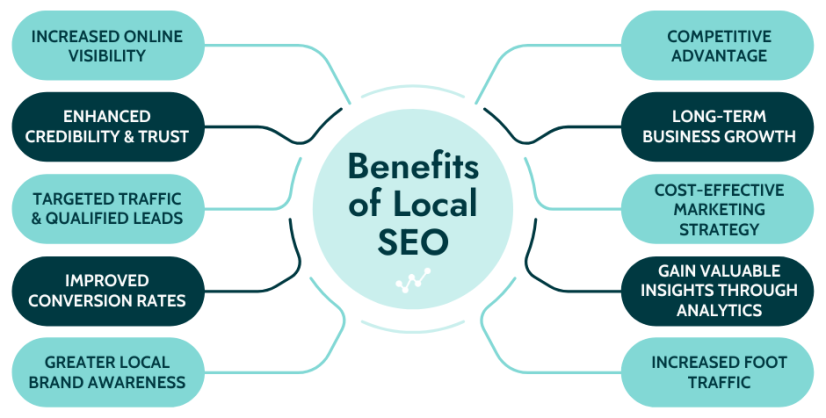
    Benefits-of-Local-SEO

    Are you concerned that these mass-generated pages might get penalized by Google? You’re not alone. The key is quality and uniqueness.

    Each page must:

    • Be valuable to users

    • Provide unique local information

    • Load fast and be mobile-friendly

    • Avoid duplicate content issues

    When executed correctly, programmatic pages can:

    • Increase impressions and clicks for long-tail, location-based searches

    • Boost domain authority with consistent linking

    • Drive conversions by meeting user intent directly

    This strategy is aligned with modern digital marketing trends and effective online marketing practices.

    Real-World Example

    Let’s say Listbusinessprofile offers SEO services for local dentists. Using programmatic SEO, we could create 200 pages like:

    • “SEO Services for Dentists in Mumbai”

    • “SEO for Dental Clinics in Delhi”

    • “Dental SEO Experts in Hyderabad”

    Each page would:

    • Have its own URL: yourdomain.com/dental-seo-mumbai

    • Include locally relevant info like population, local search stats

    • Feature a tailored CTA: “Boost Your Dental Practice in Mumbai Today!”

    This builds authority in local niches and supports users looking to list my business on Google.

    What Tools Can Help With Programmatic SEO?

    Tools to make it easier:

    • Webflow: Great for CMS-based dynamic page generation

    • WordPress + Custom Plugins: Automate publishing from data files

    • Google Sheets + Scripts: Easily create dynamic datasets

    • Page Generator Pro (WordPress Plugin): Automates mass content publishing

    • Surfer SEO / Clearscope: Ensure on-page SEO scores are optimized

    Is Programmatic SEO Right for Everyone?

    If you’ve asked yourself: “Will this work for my business?” consider this:

    Programmatic SEO works best for businesses that:

    • Serve multiple locations

    • Offer scalable, repeatable services or products

    • Want to dominate local search with minimal ongoing effort

    Industries like:

    • Real estate

    • Healthcare

    • Agencies

    • eCommerce with location delivery

    • Cleaning, plumbing, roofing, repair services

    All benefit enormously from programmatic strategies. It’s especially effective when paired with Google My Business account optimization and Google business profile manager insights.

    Best Practices to Avoid Google Penalties

    Worried about Google penalties? Here’s how to stay safe:

    • Ensure every page has unique value (testimonials, reviews, stats)

    • Don’t copy/paste generic filler

    • Add structured data for local businesses

    • Link internally to core pages to increase authority

    • Monitor pages via Google Search Console

    Remember: Google rewards quality, even at scale. Combine this approach with an intelligent marketing strategy and local SEO services to dominate your niche.

    Final Thoughts

    Programmatic SEO isn’t just a trend — it’s a game-changer for local businesses aiming to grow visibility and revenue. Instead of being stuck with 5 pages and limited reach, why not go big with 500+ optimized, useful pages targeting every customer you could possibly serve?

    Imagine the impact of showing up in dozens of local searches daily — each one linking back to your Google business profile, building trust and traffic.

    If you’re ready to expand your local reach and dominate Google rankings across regions…

    🚀 Let Listbusinessprofile Build & Rank Your Local Pages

    At Listbusinessprofile, we specialize in scaling local SEO strategies using proven programmatic methods. Whether you’re targeting 10 cities or 1,000, we can help you build, publish, and rank your local pages fast.

    We also provide expert help with Google business profile SEO, digital marketing, SEO services, Google SEO, and online marketing to help businesses grow from local to global.

    🔗 Contact us today to start ranking where your customers are searching.